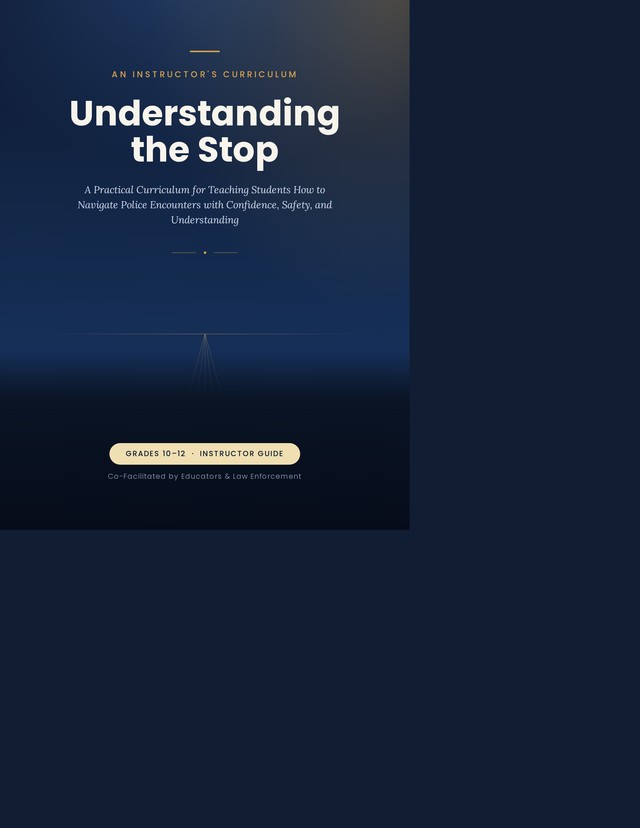
A classroom-ready curriculum, co-taught by educators and police officers, that teaches students how to navigate a traffic stop with confidence, safety, and understanding — without taking a political side.
Schools teach students how to drive, apply for a job, and manage a budget — yet most graduate without ever receiving formal instruction on what to expect during a traffic stop or police encounter. Some students learn from parents. Many more learn from social media, television, or word of mouth, and that information is often incomplete, inaccurate, or unnecessarily confrontational.
Understanding the Stop was built to close that gap — not by taking a side, but by building understanding on both sides of the encounter. Students learn what officers are doing and why. Officers gain insight into the concerns of young people. Teachers become facilitators of a conversation that actually helps.
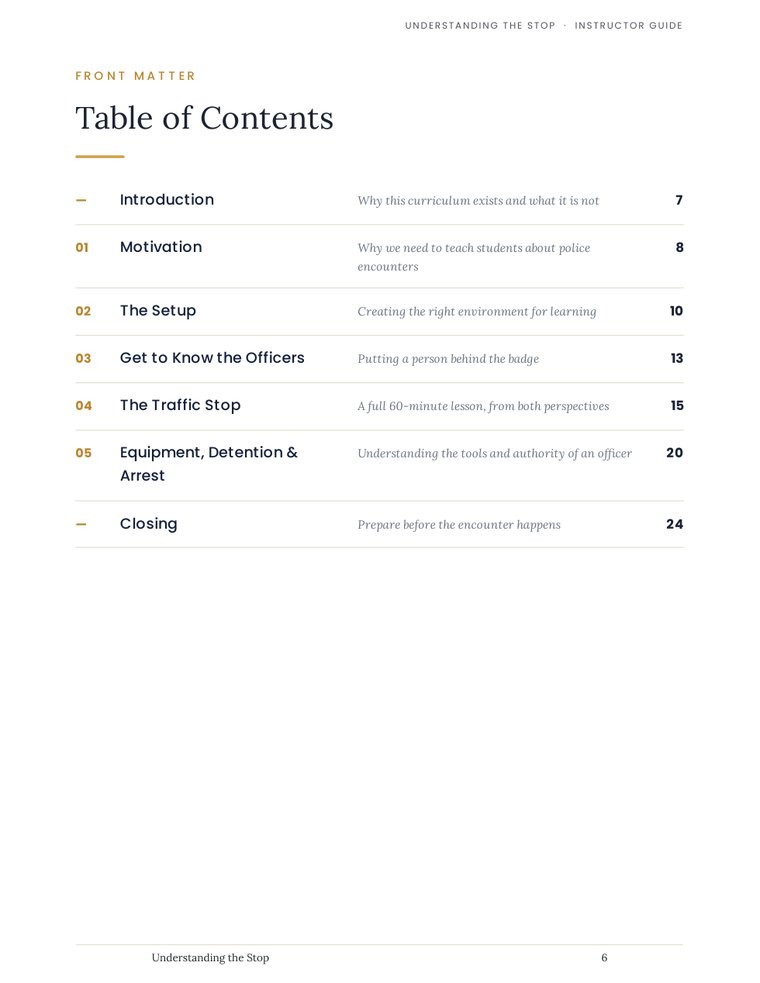
The full instructor guide — cover to closing — with lesson plans, discussion prompts, and instructor scripts built in.
Why we need to teach students about police encounters — and why understanding must go both ways.
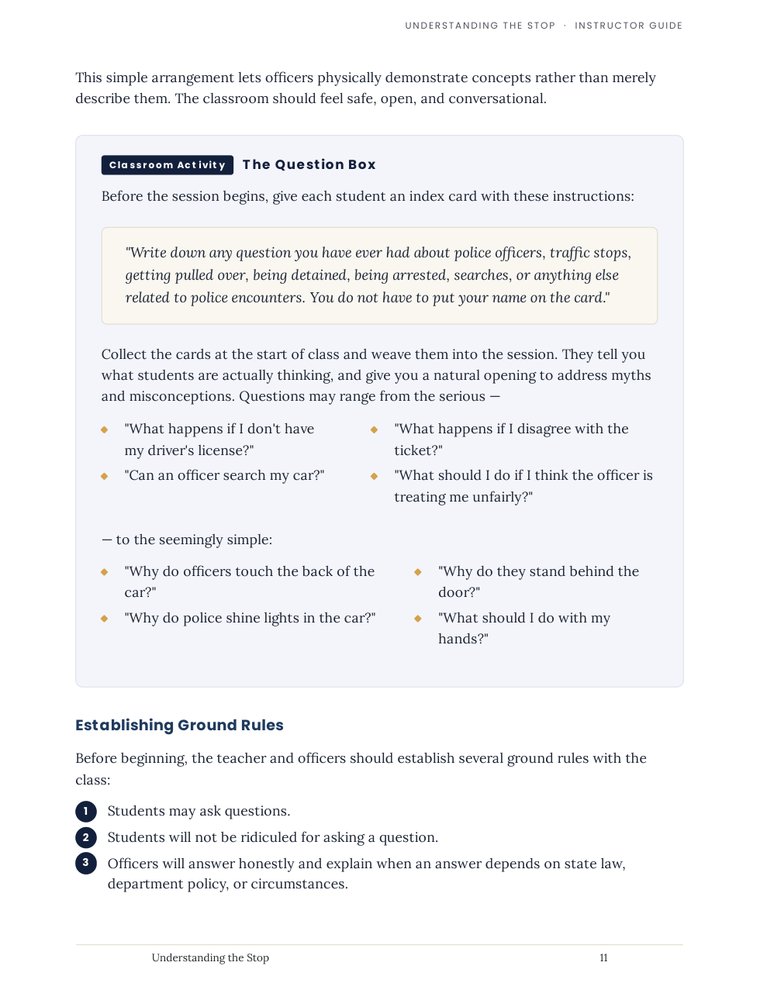
Classroom arrangement, the Question Box, and the ground rules that make honest conversation possible.
Putting a person behind the badge before diving into rules or procedure.
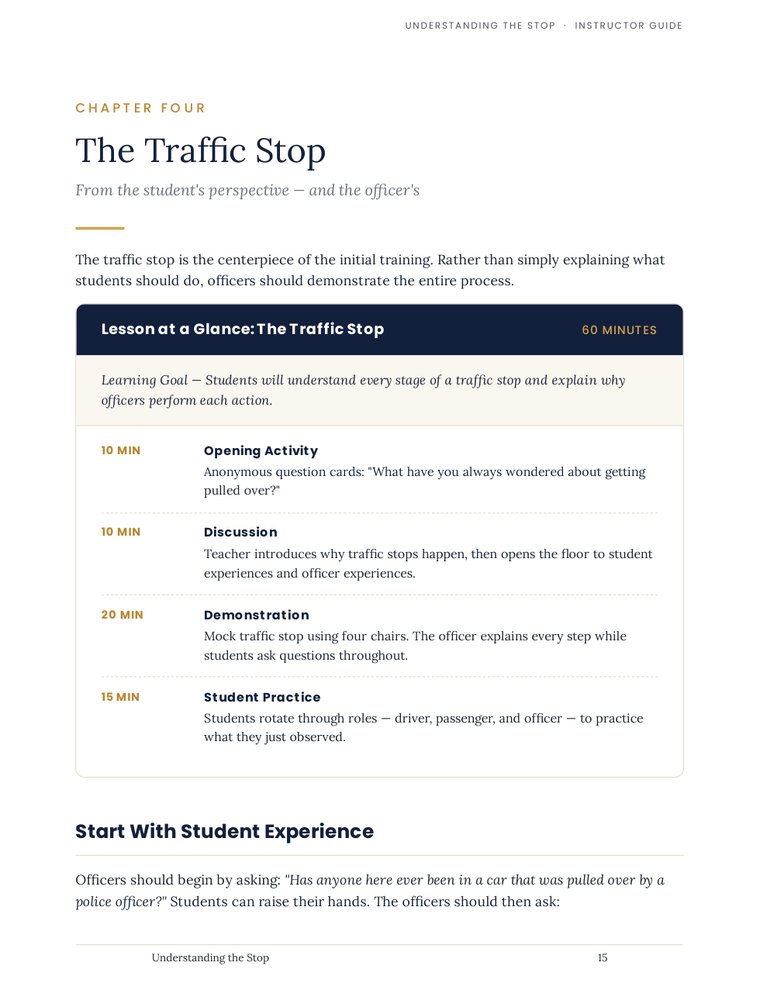
A full 60-minute lesson plan — mock stop, student roles, and instructor script included.
Demystifying an officer's tools, use of force, body cameras, and a student's rights and responsibilities.
Learning objectives, audience guide, licensing terms, and a closing built for classroom discussion.
Unlike most materials that discuss policing, this curriculum was written to be taught by schools and police departments together — and to survive contact with a skeptical room on either side of the badge.
A few pages from the instructor guide — designed to be used, not just read.


Every purchase includes the full instructor guide. Choose the license that matches how widely you'll use it.
Beyond the guide itself, Adam offers direct consulting for schools, districts, and police departments that want hands-on support getting this curriculum off the ground — from preparing the staff and officers who'll co-facilitate it, to adapting the content to your state and department policies.
Ask About ConsultingPrepare the staff and officers who'll co-facilitate — walking through the Three Perspectives model, the mock traffic stop, and how to handle tough questions live.
Adapt scripts, equipment demonstrations, and legal language so they reflect your state's law and your department's policy.
On-site or virtual planning to help your school or district launch its first session smoothly, with room to ask questions along the way.
Tell me a bit about your school, district, or department, and I'll follow up with pricing and next steps.
Prefer email? Reach out directly at
understandingthestop@gmail.com